


How the Aviation Industry Can Reach Net-Zero Emissions
Author: GA Telesis
Introduction
The aviation industry is at a critical juncture as it strives to reach net-zero emissions. The increasing awareness of climate change and its impact worldwide has made stakeholders across aviation recognize the immediate need for sustainable practices. Each step now will have lasting impact for many years. Aviation can achieve net-zero emissions through adopting SAF, the implementation of circular economic practices, optimization of fleet efficiency, supporting green innovation through MRO brilliance, and the establishment of robust environmental, social, and governance (“ESG”) strategies.
1. Embracing Sustainable Aviation Fuels (SAF) through Strategic Partnerships
 Sustainable Aviation Fuels (“SAF”) represent a cornerstone of efforts to decarbonize aviation. SAFs have the potential to reduce lifecycle greenhouse gas emissions by up to 80% compared to conventional jet fuel However, the current excessive cost of SAF, ranging from 2-4 times more than Jet-A1 fuel, poses a significant economic barrier to widespread adoption.
To effectively scale the production and use of SAF, the aviation industry must embrace strategic partnerships across various sectors: energy, agriculture, and finance. A collaboration of different US Federal Agencies created the SAF grand challenge with goals outlined for 2030 and 2050. The US Department of Energy (“DOE”), US Department of Transportation (“DOT”), US Department of Agriculture (“USDA”), Environmental Protection Agency (“EPA”), and the Federal Aviation Administration (“FAA”), all contributed to launching this Memorandum of Understanding (“MOU”).
The integration of SAF into engine testing operations is a representation of a leap toward emission reduction and climate responsibility. This MOU initiative reflects a long-term commitment to sustainability and displays how fostering relationships with energy producers and agricultural stakeholders can position companies as leaders in sustainable aviation. Such strategic steps made today will pave the way for responsible industry growth, leading to a greener future for aviation and the planet.
Mandates like the EU’s ReFuelEU aviation regulation and ICAO’s CORSIA program, are critical prongs that can incentivize airlines to implement SAF. These policies create frameworks that mandate combined targets and credit systems that reward airlines for using SAF. Additionally, fiscal incentives, including tax credits and subsidies, can alleviate the financial risk associated with transitioning to SAF.
Furthermore, innovative financing mechanisms, such as the green bonds and climate funds, can expand support of scaling SAF production. Partnerships across sectors are vital for ensuring feedstocks and scaling productions. Companies such as Neste, Airbus, and Rolls-Royce have collaborated to develop sustainable feedstock sources and production technologies.
Multilateral organizations, including but not limited to ICAO, UNIDO and IATA, facilitate tech transfer and financing in developing economies to ensure that SAF benefits are accessible to a wider audience of stakeholders. Strategic decisions and innovations – some initiated decades ago – have created benchmarks for sustainable aviation, shaping how the industry can and must grow responsibly and resiliently.
Challenge in Scaling SAF Production and Distribution
Substantial supply chain and infrastructure challenges currently hinder the achievement of the SAF Grand Challenge goal of producing 3 billion gallons annually by the year 2030. The United States currently produces an average of 250 million gallons annually, which is less than 10% of the target.
Key bottlenecks include production capacity constraints as only 6 commercial-scale biorefineries are operational. Furthermore, feedstock availability is limited, making it necessary to expand urban solid waste and algae.
Infrastructure gaps also pose a challenge with about only 15% of U.S. airports being equipped for SAF handling and blending. Upgrading these facilities can be capital-intensive, costing anywhere from $10 million to $50 million per site. Another hurdle is logistical integration, as pipelines and blending facilities require adaptation for SAF compatibility. Competing bioenergy demands from other sectors, such as ground transport and shipping, further complicate things along with regulatory delays that stem from lengthy certification processes and inconsistent state-level incentives that cause market uncertainty.
Emerging SAF Pathways and Global Harmonization
To fast-track the certification and global harmonization of SAF standards, especially for emerging fuels such as Power-to-Liquid e-kerosene, algae-based biofuels, and ammonia-derived hydrogen carriers, several strategies can be implemented. These emerging SAFs hold significant potential as seen by e-kerosene which can be carbon-neutral when produced with renewable electricity and captured CO2, while algae-based fuels offer high energy density without competing for food crops, and ammonia carriers provide efficient hydrogen storage.
They, however, face certification hurdles. The ASTM D7566 currently only covers 7 pathways and e-kerosene is still under review, a process that can take 5-7 years. Regulatory harmonization is crucial and organizations like ICAO’s CAEP (Committee on Aviation Environmental Protection) and CAAF forums work together to promote global consistency in standards and sustainability criteria.
In addition, mutual recognition agreements between ASTM (USA), EASA (Europe) and other governing bodies can help avoid duplicative certification procedures. Lastly, investment in research such as funding testing centers like the FAA’s Center of Excellence and Germany’s DLR can expedite validation. Implementing transparent carbon accounting and sustainability certification schemes like those approved by ICAO CORSIA will ensure environmental integrity beyond just carbon emissions.
ICAO ACT-SAF (Assistance, Capacity-building, and Training for SAF)
The ICAO ACT-SAF program was launched in 2022 and expanded through 2024; it was designed to assist countries (particularly in the Global South) in developing SAF roadmaps. This initiative focuses on enabling policy development, aligning certification processes, and establishment of monitoring mechanisms for SAF production and use.
By supporting the adoption of SAF, this program aims to reduce carbon footprint and promote sustainable practices globally. The program exemplifies collaboration that is needed to address the challenges of decarbonization in aviation and spotlights the importance of capacity building in achieving sustainability goals.
2. Extending Asset Life through Circular Economy Practices
 Circular economy presents a transformative opportunity for aviation to minimize waste and reduce inadvertent environmental impacts. Promoting circular practices through maximizing the reuse, repair, and repurposing of high-value components, extends the lifecycle of aircraft components and mitigates environmental impacts associated with producing and procuring new parts.
In today’s aviation landscape, emphasis on circularity is gaining significant traction. Companies are rapidly recognizing that extending lifecycles of aircraft components through reusing and repairing can significantly reduce emissions from new manufacturing processes avoiding creation of new storage spaces. By salvaging and refurbishing high-value components such as engines, landing gear, and avionics, companies can conserve valuable resources.
The Aircraft Fleet Recycling Association (“AFRA”) has been at the forefront of promoting best practices in the sustainable disassembly and recycling of commercial aircraft. Through its initiatives, the industry has achieved over 90% recovery of an aircraft’s weight in recyclable materials, highlighting the significant potential for waste reduction in this sector.
Overall, leading original equipment manufacturers (“OEMs”) and maintenance, repair, and overhauls (“MROs”) are increasingly adopting circular practices. For example, Rolls-Royce’s Revert program recycles up to 98% of their used gas turbine components across its global MRO network. Airbus and Tarmac Aerosave similarly are at the forefront of high-volume aircraft recycling efforts and investing in infrastructure and technologies that support circularity.
Transitioning to a circular economy approach is supported by technological advancements including robotics and machine learning for component recovery and inspection. Digital twins and lifecycle analytics can enable companies to optimize their maintenance planning, reduce timing, and further enhance efficiency of circular practices.
3. Optimizing Fleet Efficiency with Smart Asset Management
3.1 Introduction to Fleet Efficiency and Smart Asset Management
An essential part of aviation today is optimizing fleet efficiency as a method to reduce carbon emissions. Programs that allow access to high-efficiency engines and components empower airlines to integrate solutions to maintain optimal performance.
3.2 Predictive Analytics and AI in Aviation
The industry is increasingly leveraging smart asset management technologies for this. Application of predictive analytics and AI plays a pivotal role in optimizing maintenance schedules, reducing unscheduled maintenance, and improving overall operational efficiency. For example, Boeing’s Integrated Aircraft Health Management (“IAHM”) system (in partnership with the FAA) utilizes the real-time telemetry to detect anomalies such as vibration and temperature and enables condition-based scheduled maintenance (“CBSM”), in turn, reducing aircraft-on-ground (“AOG”) time and improved fleet availability.
3.3 Digital Twin Technology and Fleet Optimization
In addition to these advancements, digital twin technology is also revolutionizing the industry by enabling real-life simulations for aircraft performance and maintenance requirements. For instance, Airbus connects over 12,000 aircraft using its Skywise platform, it utilizes digital twins to optimize flight operations and reduce fuel consumption. This technology guides a path for airlines to predict component wear and make informed decisions about maintenance and retrofitting, which ultimately enhances fleet efficiency.
3.4 Strategic Impact of Smart Asset Management
Overall, integrating smart asset management tools not only contributes to reducing emissions but also enhances operational efficiency and cost-effectiveness. Though there are significant hurdles to overcome to achieve the goal of a greener future in air travel, by embracing predictive analytics, digital twin technologies, and integrated aviation solutions, airlines can enhance operational performance while reaching their environmental goals.
Predictive maintenance alone can reduce unplanned maintenance events by up to 50% and cut total maintenance costs by 5–10%, while increasing aircraft availability by 20% (Deloitte Insights, 2023). Fuel optimization technologies powered by AI can deliver 2–5% savings, contributing directly to emissions reduction. According to IATA, even a 1% global fuel savings could eliminate approximately 3 million tons of CO₂ annually (IATA Fuel Efficiency Report, 2021).
In addition, digital twin systems and condition-based monitoring further reduce emissions and downtime while improving asset reliability and operational planning. In short, smart asset management is no longer just a technical upgrade, it is a strategic enabler for decarbonizing aviation.
4. Supporting Green Innovation through MRO Excellence
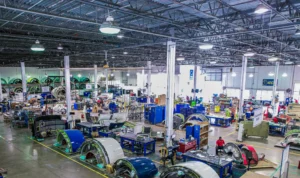 MRO practices play an essential role in supporting green innovation within aviation. Global MRO capabilities offer cost-effective and eco-conscious solutions in maintenance to extend aircraft system lives. By emphasizing sustainable practices, MRO providers can help airlines avoid waste while maintaining the highest safety and quality standards.
Customers’ demand for greener aviation services and increasing regulatory expectations are driving the MRO sector to evolve by integrating sustainable practices in operations. Today’s leading MROs are investing in energy-efficient facilities, using renewable energy resources, adopting low-impact chemicals and fluids such as non-toxic solvents, biodegradable degreasers, and water-based cleaning systems to reduce their hazardous waste and VOC emissions, which leads to reducing their environmental impacts. For example, Lufthansa Technik implemented a solar PV system and energy efficient hangar lighting to minimize operational emissions.
As the industry shifts to electric, hybrid and hydrogen propulsion systems, a comprehensive overhaul of MRO capabilities is necessary to support these platforms on a significant scale. A key requirement of this is implementing reskilling and certification programs where technicians must be trained in high voltage safety, battery management systems, and cryogenic handling for liquid hydrogen. Organizations like EASA and FAA are actively creating new training standards to incorporate competencies for electric and hydrogen aircraft.
In continuation of this effort, specialized equipment and infrastructure will be a necessity. For hydrogen aircraft, MRO facilities will need cryogenic storage tanks, leak detection and ventilation protocols, and fireproofed zones with hydrogen specific safety points. Electric aircraft will require high-voltage isolation bays and battery diagnostic systems to manage thermal runaway risks.
Furthermore, integration of digital infrastructure and IoT technologies are essential since electric and hybrid platforms are sensor-rich and mandate advanced data analytics, cloud-based health monitoring, and secure digital platforms. Cross-sector collaboration will play a crucial role with partnerships among battery manufacturers, fuel cell developers, and hydrogen suppliers being key for knowledge sharing and technical support.
Another rapidly growing focus is material circularity for MRO providers. By promoting repair and refurbishment of components rather than replacement, MROs can significantly reduce the need for virgin material production leading to lower overall emissions. Aviation companies in this area operate teardown and component reuse programs that align with circular economic goals, demonstrating the potential for sustainable practices in the MRO sector.
Technological innovations such as AI-based predictive maintenance and robotics for inspection are spearheading transformative changes in MRO efficiency and sustainability. For instance, GE Aerospace’s use of digital twins in engine health monitoring has led to substantial reductions in turnaround time and lower fuel and material usage. Furthermore, non-destructive testing methods (“NDTs”) powered by machine learning improve flaw detection while minimizing environmental impact.
5. Enabling Carbon Reduction through ESG Strategy and Reporting
Robust environmental, social and governance (“ESG”) strategies are crucial for the aviation industry to achieve net-zero emissions. Transparent reporting, alignment with various international organizations’ standards and active participation in implanting sustainable practices are all essential elements of this strategy.
The industry is committed to supporting the path to net-zero with transparent ESG reporting and alignment with EcoVadis and CSRD standards. Companies adopting these best practices can highlight their commitment and accountability positioning themselves as leaders in the field. Collaborative efforts with industry stakeholders and companies can drive measurable progress towards decarbonizing aviation and other sustainability goals.
By sharing knowledge, resources, and best practices, they contribute to the collective effort to decarbonize the aviation sector. In addition to ESG reporting, the industry is making use of regulatory frameworks such as the Carbon Offsetting and Reduction Scheme for International Aviation (“CORSIA”) to help mitigate their carbon footprint and aims to stabilize the net CO2 emissions from international flights by requiring airlines to offset their emissions through numerous mechanisms. Of parallel importance, innovative solutions like Direct Air Capture (“DAC”) are being explored to remove CO2 from the atmosphere, providing a complimentary approach to carbon reduction.
The industry’s focus on its Scope 3 emissions should not be overlooked as this frequently accounts for the largest percentage of a company’s emissions. Enforcing tools and frameworks that accurately measure the emission savings from circular practices such as teardown, repair and parts harvesting is the essential fostering of widespread adoption of this concept.
Worth noting is Carbmee’s “Repairability Carbon Score” that assesses CO2 savings based on the ease of repair, part reuse rates, and carbon lifecycle modeling specifically for Scope 3 categories. The GHG protocol and ISO 14067 also serve as primary references for Scope 3 carbon foot printing; although capital goods and reused components are often underrepresented unless companies voluntarily extend their boundaries. These efforts will pioneer a new era of excellence with a greener aviation world.
6. Aligning with Evolving ESG Disclosure Frameworks
Key frameworks spearheading transformative change include the EU Corporate Sustainability Reporting Directive (“CSRD”), the Task Force on Climate-Related Financial Disclosures (“TCFD”), and the International Civil Aviation Organization’s (“ICAO”) ATC-SAF program.
6.1 CSRD (EU Corporate Sustainability Reporting Directive)
The CSRD came into force in 2024 for large companies in 2025-2026 for non-European entities with significant operations in Europe. It mandates comprehensive disclosures on sustainability impacts and companies are required to adhere to the European Sustainability Reporting Standards (“ESRS”), which emphasize the need for detailed reporting on environmental performance, social responsibility, and governance practices. This directive aims to ensure that stakeholders (including investors and customers) have access to reliable and comparable sustainability information, which leads to fostering informed decision-making and promoting sustainable practices.
6.2 TCFD (Task Force on Climate-Related Financial Disclosures)
The International Financial Reporting Standards (“IFRS”) S2 under the International Sustainability Standards Board (“ISSB”) has integrated the TCFD framework. TCFD-aligned climate risk disclosures are gradually becoming a standard practice for companies; it requires them to report on transition risks, physical risks, and climate resilience strategies.
By adopting TCFD, companies can better grasp and communicate their exposure to climate-related risks and opportunities, therefore enhancing their ability to manage and mitigate these challenges effectively. Additionally, it builds investor confidence and supports regulatory compliance while demonstrating a commitment to sustainability and risk management.
Conclusion
The aviation industry is driving forward with relentless momentum to align with these evolving net-zero commitments as achieving such goals requires rigorous compliance. By embracing transparency as a minimum requirement and not a bonus, GA Telesis shows how aviation stakeholders can contribute to a more sustainable future while meeting expectations of customers, investors, regulators, and the public. This proactiveness is crucial for the industry as it drives innovation, investment, and reputation of aviation, and ultimately supports global transition to net-zero emissions. This is a huge step in how GA Telesis intelligently defines the future of aviation.